KEY FEATURES
I. Construction and Main Vessel (Chamber)
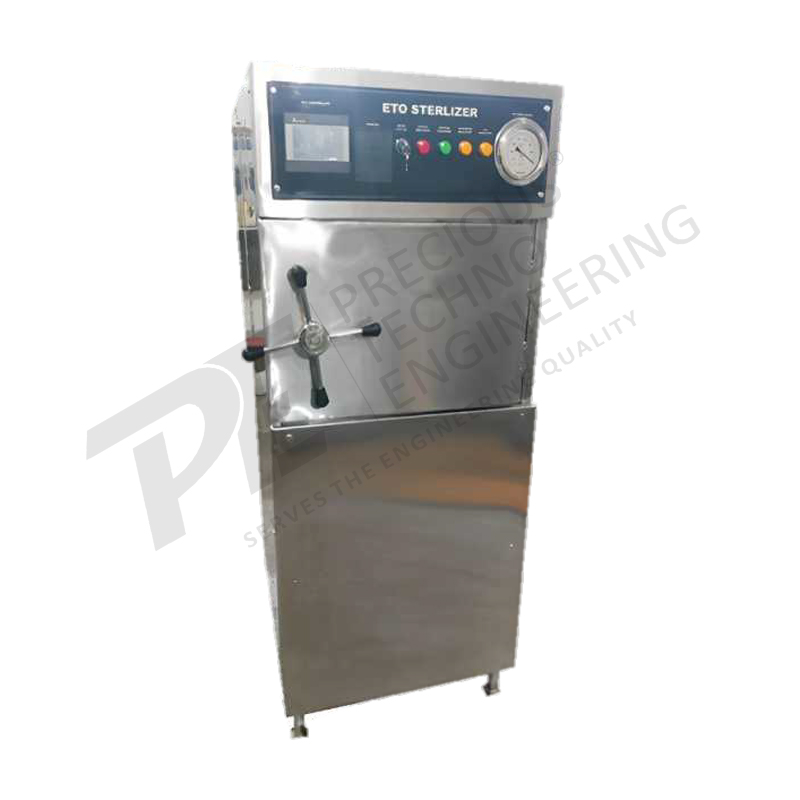
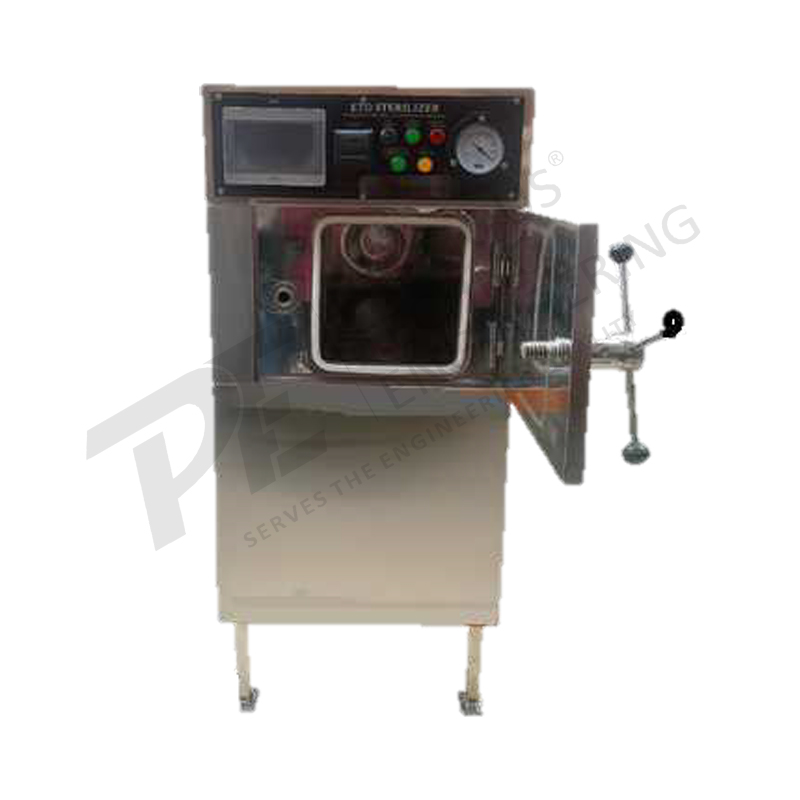
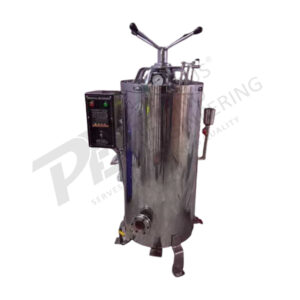
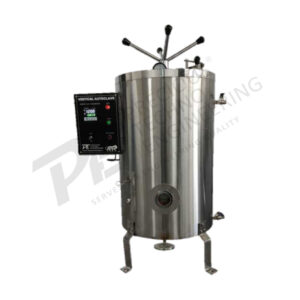
The core component is the Sterilizer Vessel or Chamber, which is a specialized pressure vessel designed for both vacuum and pressure.
- Material: It constructed of stainless steel (such as SS 304 or SS 316L) to withstand pressure and be corrosion-resistant.
- Design: Built to withstand pressures ranging from near-complete vacuum 1Hg to pressures above atmospheric pressure 1.5 kg/cm2.
- Jacket/Heating System: The chamber often features an exterior shell or jacket through which hot water, steam, or heated air is circulated. This is crucial for maintaining the precise and uniform temperature often in the range of which is a critical sterilization variable.(35 OC to 63 OC)
- Doors: single -door configuration maintain segregation between unsterile and sterile areas. Doors are heavy-duty, gasketed, and lock securely during the cycle.
II. Technical and Operating Systems
The sterilizer relies on several integrated technical systems to execute the four critical sterilization variables: Gas Concentration, Humidity, Temperature, and Time.
1. Vacuum System
Function: Used to create an initial near-complete vacuum in the chamber to remove air (which could inhibit ETO penetration and later to exhaust the ETO gas.
Components: Typically includes a powerful water- venturi vacuum pump (for cartridge-based systems) and associated piping and valves.
2. Gas Supply and Injection System
- Function: Stores and precisely introduces the Ethylene Oxide sterilant into the chamber.
- ETO Source: Can be compressed-gas single-dose cartridges (often 100% ETO, which requires a pre-purging with an inert gas)
- Vaporizer: For tank-supplied systems, ETO is often vaporized before injection to ensure it enters the chamber as a gas.
- Valves and Piping: Specialized systems of pneumatic valves, pipes, and flow detection to manage the precise, controlled dosage.
- Electronic Scale: Used to measure the exact amount of ETO injected into the chamber.
3. Humidification System or Boiler
Function: It gives steam or vapor to achieve the required relative humidity (typically 40% to 80%), as ETO is only effective in a humid environment.
Components: Often involves injecting steam into the chamber during the preconditioning phase.
4. Control System
Function: The “brain” of the sterilizer, responsible for monitoring, regulating, and documenting all process parameters.
Components:
- HMI PLC:- Executes the validated sterilization ” recipes” (process parameters). A touch-screen panel for operator control, data entry, and status display 7 inch Color
- Sensors: High-precision sensors for continuous monitoring:
- Temperature Sensors (PT-100): To monitor and control chamber and jacket temperature.
- Pressure Sensors: To monitor and control the chamber pressure/vacuum.
- Data Recorder: For recording historical process data and generating reports for regulatory compliance.
5. Aeration/Degassing System
Function: Removes residual ETO gas from the sterilized items after the exposure phase, making them safe for handling and use. This is the longest phase of the cycle.
Components:
- Dedicated Aeration Chamber (or In-Chamber Aeration): Circulates HEPA-filtered air over the load.
- Exhaust/Ventilation: A gas-tight ventilation system connected to the chamber.
- Tail Gas Treatment System (Abatement): A crucial environmental and safety component (often a Catalytic Abatement system or a Water Scrubber) that neutralizes the toxic and flammable ETO before it is released to the atmosphere. (Optional).
6. Safety Features
Due to the flammable, explosive, and toxic nature of ETO, safety features are integral:
- Safety Alarms and Interlocks: Automated systems (like LEL/PPM monitoring) to stop the process or prevent door opening if gas concentration or pressure exceeds safe limits.
- Pressure Safety Valve: Mechanical relief to prevent over-pressurization.